The Complete Industrial Guide to Maximising Uptime, Throughput and Profitability
Industrial shredders and granulators are not background equipment. In most recycling and plastics operations, they are the front end of the entire process. If size reduction is inconsistent, the rest of the line usually suffers with it. Washing becomes less effective, separation becomes less accurate, dryers work harder, and overall product quality becomes harder to control. Rotajet’s own plastics content reflects that same principle: size reduction comes first, then washing, separation and downstream recovery.


That is why shredder servicing and granulator servicing should not be treated as a narrow maintenance task. The goal is not just to keep a machine turning. The goal is to protect throughput, maintain cut quality, reduce avoidable wear, and keep the whole system working efficiently. HSE’s guidance makes the same broader point: maintenance is carried out to prevent problems, correct faults and ensure equipment is working effectively, and an effective maintenance programme improves reliability, productivity and efficiency.
Why servicing matters more than most sites realise

A machine can still run and still be costing money. A shredder with worn knives, a blocked screen, poor rotor condition or incorrect settings may keep processing material, but it will usually do so less efficiently. In practice that can show up as inconsistent output size, more dust or fines, increased recirculation, extra operator intervention, more stress on bearings and drives, and poor feed consistency into washing or separation stages.
That matters even more in plastic recycling. Rotajet states that plastic recycling begins with size reduction and that shredders and granulators prepare material for washing, separation and pelletising; it also notes that smaller particles improve movement through recycling equipment and that flake size supports washing and separation performance.

For heavily contaminated plastic streams, the connection is even stronger. In the anaerobic digestion reference sheet you provided, mixed plastic from food waste depackaging is described as containing up to 50% moisture and 25% organic residue, with the RJ-Turbo then using high-speed friction and water injection to remove food residues, fats and oils. If the incoming material is not opened up properly by upstream size reduction, contamination is harder to expose and remove.
Shredder servicing vs granulator servicing
Although the two are often grouped together, they do different jobs and need different service priorities.
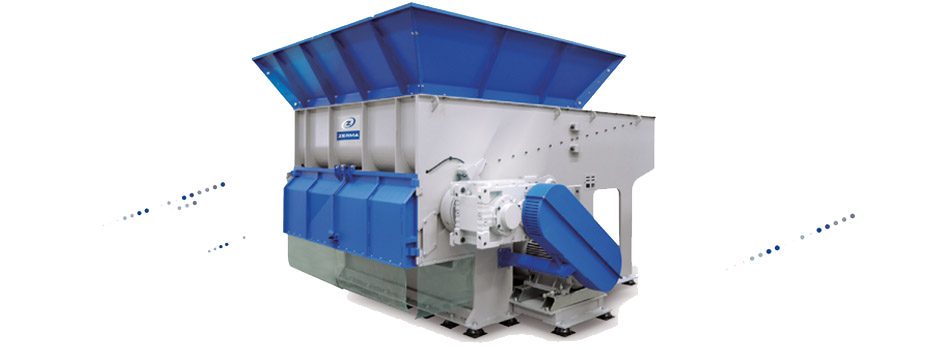
A shredder is usually the primary size reduction stage. Rotajet’s size reduction pages describe shredders as the stage that reduces bulky materials into a manageable shredded size, typically using high torque to handle larger items such as drums, pallets, rigid containers and industrial packaging.
A granulator is normally the secondary reduction stage. Rotajet describes granulators as higher-speed machines that cut plastics into smaller flakes or regrind suitable for washing and recycling, with screens used to control particle size.
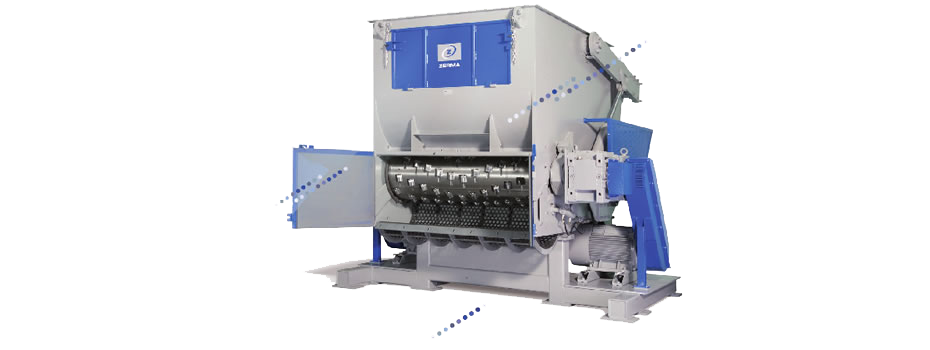
That distinction matters because servicing priorities are different. Shredders tend to be more tolerant of variation, but they see high torque loads and large infeed shocks. Granulators are more sensitive to knife sharpness, knife gap, rotor balance and screen condition because they are controlling a much finer and more consistent output.
Types of machine Rotajet can support
This is one of the areas where your article needed to be clearer. It should explicitly say what kinds of machine can be serviced, repaired, upgraded or supported with spares.
Rotajet’s size reduction offering covers industrial shredders, granulators, combined shredder/granulator systems and replacement blades and parts, alongside service support and rental options. The public pages also show a broad range of equipment from compact to heavy-duty, including slow-speed granulators, heavy-duty granulators, standalone shredders, and the ZCS combined shredder/granulator system.
Machines commonly covered include:
- Single-shaft shredders for bulky rigid plastics and industrial waste
- High-torque shredders for containers, drums, pallets and packaging
- Combined shredder/granulator systems for compact integrated size reduction
- High-speed granulators for flake production before washing or extrusion
- Slow-speed granulators for sprues, runners and beside-the-press applications
- Heavy-duty granulators for more demanding recycling duties
- Existing third-party shredders and granulators where replacement blades, screens or servicing support are required
Rotajet’s own site states it supplies replacement blades for Rotajet granulators and for various external granulator manufacturers, and also replacement shredder blades for multiple external machine brands.
What proper servicing should cover
A proper shredder or granulator service should go beyond “swap the obvious worn parts and leave.” The most useful service programmes usually combine inspection, wear management, setup correction and process review.
1. Knives, cutters and cutting geometry
Knife condition is the first thing most operators think about, and rightly so. Sharp, correctly mounted knives improve cut quality, reduce unnecessary load and help produce a more consistent output. Granulators rely on good interaction between rotor knives, bed knives and screen size. Rotajet’s granulator content identifies granulators as high-speed knife systems controlled by screens, which is exactly why knife condition matters so much.
2. Screens and particle control
Screens are central to consistent granule size. Damaged or blinded screens can reduce throughput and create an inconsistent downstream feed. On combined systems and granulators, screen integrity directly affects wash performance, separation behaviour and flake consistency.
3. Rotor condition and balance
Poor rotor condition can create vibration, accelerate bearing wear and make output less consistent. In higher-speed granulation, balance is particularly important because small defects become more damaging as speed rises.
4. Bearings, drive systems and transmission components
Bearings, belts, couplings and gearbox condition all affect reliability. HSE notes that maintenance is not only about correcting faults but about preventing problems and diagnosing them early. That is especially relevant with rotating machinery where early intervention is far cheaper than a breakdown.
5. Feed behaviour and material handling
A shredder may be mechanically sound and still perform badly because the machine is not matched properly to the feedstock. Film behaves differently to rigid containers. Wet, contaminated plastics behave differently to dry in-house scrap. Production waste, drums and industrial packaging all create different load profiles. Rotajet’s size reduction and plastic recycling pages repeatedly frame machine choice around the plastic type, contamination level, throughput target and required particle size.
Application-specific servicing is where the real value is
One reason generic servicing underdelivers is that size reduction is highly application-dependent.
Plastic recycling
Rotajet’s plastic recycling pages make clear that shredders and granulators are used across rigid plastics, films, industrial packaging, injection moulded parts, WEEE-related streams and production waste. Different materials need different knife setups, feed strategies and maintenance intervals. Film can wrap. Rigid packaging can shock-load a machine. Contaminated rigid plastics can accelerate wear on cutting components and screens.

Washing-line applications
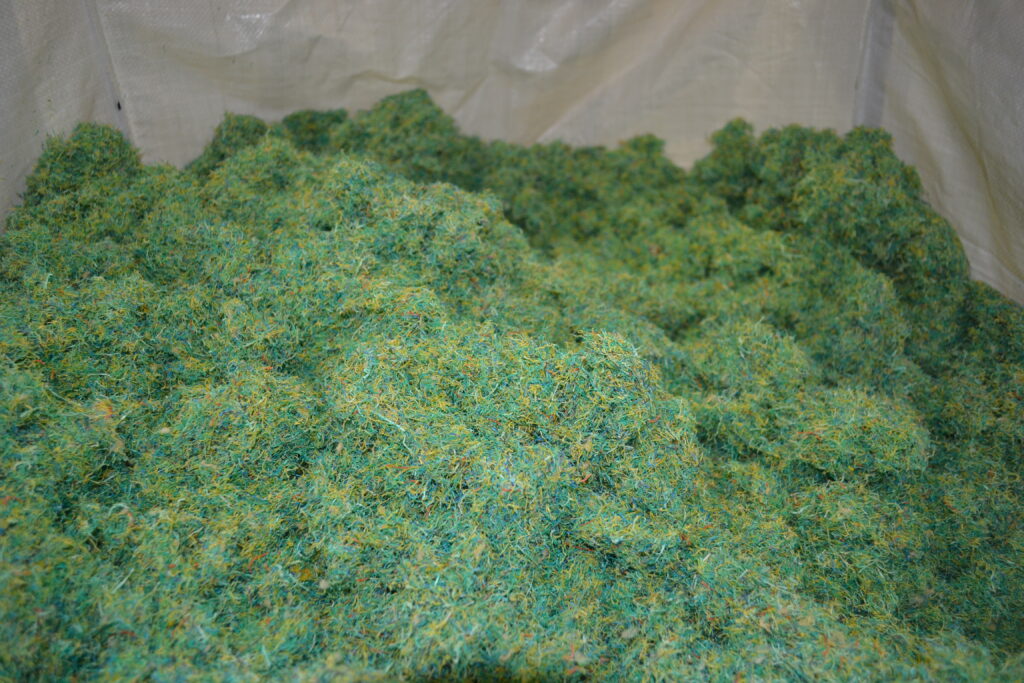
This is where Rotajet has a strong SEO and commercial angle. The company’s plastics content is built around integrated process performance, not isolated machines. Rotajet’s March 2026 UK recycling machinery article explicitly says the focus is on complete process performance, not just individual machines, and highlights modular systems including size reduction, washing and sink-float separation.
That message fits perfectly here. If the objective is clean flake, not merely reduced volume, servicing should protect the washing process too. Incorrect particle size, smeared cuts, overloaded washers or uneven feed into sink-float tanks all reduce the quality of the final recyclate.
Organic-contaminated plastics and AD streams
The AD reference sheet is especially useful because it ties size reduction directly to washing difficulty. It describes a stream with heavy moisture and organics and a friction-wash stage designed to remove residues and return valuable organics back into the process. In those applications, shredder and granulator servicing is not just about uptime. It is about exposing contamination so the wash system can do its job.
In-house production scrap
Slow-speed granulators are commonly used beside presses for runners, sprues and rejected mouldings. Rotajet’s GSL page describes slow-speed granulators for injection and blow moulding, with low rotor speed helping reduce noise and dust. In those environments, servicing priorities often include blade condition, noise control, clean running and consistency of regrind for reuse back into the process.
Repair, upgrade or replace?
Not every machine needs replacing. Many need the right service work, better wear-part discipline and a more realistic maintenance plan. In other cases, the right answer is an upgrade or a process rethink.
Rotajet already positions this well on its public pages through a mixture of servicing, spare parts, rental and modular process upgrades. The company’s UK recycling content highlights retrofit layouts, modular upgrades and Buy, Rent, Retrofit and Contract pathways.
A machine is usually a good candidate for servicing or retrofit if the frame, chamber and drive are fundamentally sound, the output requirement is still achievable and the main issue is wear, setup or process compatibility. Replacement becomes more attractive when capacity is consistently wrong, wear cost has become excessive, or the machine no longer fits the rest of the line.
Buy, Rent or Contract: the commercial route matters too
This is another area where Rotajet has a clear angle. Its size reduction page states that size reduction machinery is available for purchase or rental, and the rental page promotes benefits such as improved cash flow, flexibility, Rotajet-handled servicing and no storage hassle at the end of the project.
That means the article should not end at maintenance. It should show the three practical routes a UK customer can take.
Buy
Buying is the right route when the site needs a permanent capability, wants full control and can justify long-term ROI through in-house processing and lower dependence on external contractors.


Rent
Rental is ideal for urgent capacity, temporary projects, proving a process, replacing a failed machine fast, or reducing upfront capital pressure. Rotajet explicitly markets shredder rental on that basis.
Contract
For businesses not ready to invest yet, contract processing can still be the right stepping stone while throughput, material quality and economics are proven.

Why Rotajet is a stronger fit than a basic service supplier
This is the point you want to land hard, but only once and cleanly.
Rotajet’s public plastics content consistently ties together size reduction, washing, separation, modular plant design, trial work and flexible commercial routes. The company also highlights a Wakefield trial facility for evaluating materials and process suitability. That combination matters because it means the conversation can move beyond “what part failed?” to “what output do you need and what is the line struggling with?”
That is a better SEO message and a better sales message. It positions Rotajet as a UK engineering partner for process performance, not only a reactive repair provider.
Conclusion
Shredder and granulator servicing is not just a maintenance topic. It is a throughput topic, a quality topic and, in many recycling lines, a washing-performance topic too. If the size reduction stage is inconsistent, everything downstream becomes harder and more expensive to control.
That is why a stronger UK servicing offer should cover more than emergency repairs. It should include wear-part strategy, knife and screen management, rotor and drive checks, setup optimisation, material-specific advice and a clear route to Buy, Rent or Contract depending on what the site needs next. Rotajet’s own public offering already supports that broader position through size reduction machinery, granulators, shredders, rental and integrated plastics systems.

If your shredder or granulator is reducing output quality, causing excessive wear, or holding back your washing line, speak to Rotajet about a service review, replacement blades, a rental machine or a full size-reduction upgrade. In the UK market, the strongest result usually comes from treating shredding, granulation and downstream washing as one joined-up process, not as separate problems.
FAQ
1. How often should a shredder be serviced in the UK?
Shredders should typically be inspected monthly and serviced every 3–6 months depending on workload and material type. Heavy-duty recycling operations or contaminated waste streams may require more frequent servicing to maintain performance and prevent costly downtime.
2. How often should a granulator be serviced?
Granulators require more frequent servicing due to high-speed operation. Knife checks should be weekly, sharpening every 100–300 hours, and full servicing every 2–3 months.
3. What are the signs a shredder needs servicing?
Reduced throughput, increased power usage, inconsistent output size, material wrapping, vibration, and frequent blockages all indicate servicing is required.
4. What are the signs a granulator needs servicing?
Common signs include poor particle size consistency, increased fines, overheating, vibration, and higher motor load.
5. What does a full shredder service include?
Knife rotation/replacement, screen inspection, rotor checks, hydraulic system inspection, bearing checks, and drive system maintenance.
6. What does a granulator service include?
Knife sharpening, knife gap adjustment, rotor balancing, screen inspection, bearing checks, and full machine cleaning.
7. Can all brands of shredders be serviced?
Yes — most industrial service providers support multiple brands and can supply compatible blades, screens, and parts.
8. Can all granulator brands be serviced?
Yes — including both Rotajet and third-party machines, with replacement wear parts available.
9. Is it better to repair or replace a shredder?
Repair if the structure is sound and performance can be restored. Replace if energy inefficiency, capacity limits, or wear costs are too high.
10. Is it better to repair or replace a granulator?
If precision can be restored (knives, rotor, alignment), repair is viable. If performance cannot meet required output quality, replacement is recommended.
11. How does servicing reduce energy costs?
Sharp knives and correct setup reduce resistance, lowering motor load and reducing energy consumption per tonne processed.
12. Why is particle size important in recycling?
Consistent particle size improves washing, separation, and final product quality, increasing material value.
13. How does shredding affect washing systems?
Poor shredding leaves contamination trapped, reducing washing efficiency and increasing water and energy usage.
14. What is the difference between shredding and granulation?
Shredding reduces bulk material size, while granulation produces consistent, smaller particles for processing.
15. What materials can be processed by shredders?
Rigid plastics, film, packaging, pallets, containers, metals, and mixed waste streams.
16. What materials can granulators process?
Plastic regrind, films, moulding scrap, and pre-shredded materials.
17. How does contamination impact servicing?
Contamination accelerates wear, increases cleaning requirements, and reduces machine efficiency.
18. What is knife rotation and why is it important?
Rotating knives extends lifespan and maintains cutting efficiency before full replacement is required.
19. What happens if knives are not maintained?
Poor cutting, increased energy use, more fines, and reduced throughput.
20. What is rotor balancing?
Balancing ensures smooth operation, reduces vibration, and extends bearing life.
21. What causes shredder blockages?
Overfeeding, incorrect material type, worn knives, or blocked screens.
22. What causes granulator vibration?
Rotor imbalance, worn bearings, or incorrect knife setup.
23. What is preventative maintenance?
Scheduled servicing designed to prevent breakdowns and maintain performance.
24. What is reactive maintenance?
Repairing machines only after failure, often leading to higher costs and downtime.
25. Can servicing improve throughput?
Yes — properly serviced machines can significantly increase processing capacity.
26. How does servicing affect product quality?
Better cutting produces consistent material, improving recyclate quality and value.
27. What industries need shredder servicing?
Recycling, waste management, plastics manufacturing, food processing, and engineering.
28. What industries need granulator servicing?
Plastic recycling, injection moulding, packaging, and manufacturing.
29. What is a slow-speed granulator?
A machine designed for quieter, lower-speed processing, often used in production environments.
30. What is a high-speed granulator?
A precision cutting machine used for producing uniform plastic flakes at high throughput.
31. What is a single shaft shredder?
A slow-speed machine with a hydraulic ram, used for controlled size reduction.
32. What is a twin shaft shredder?
A high-torque machine used for heavy-duty materials and bulk waste.
33. What is a combined shredder and granulator?
A system that performs both primary and secondary size reduction in one machine.
34. Can shredders handle wet or contaminated waste?
Yes, but they require specialised servicing due to corrosion and build-up risks.
35. What is the role of screens in granulators?
Screens control output size and ensure consistent particle production.
36. How do you prevent film wrapping in shredders?
Correct knife setup, anti-wrapping design, and regular cleaning.
37. What are the benefits of renting a shredder?
No upfront cost, quick deployment, and flexibility for short-term needs.
38. What are the benefits of renting a granulator?
Allows testing, avoids capital investment, and supports temporary capacity increases.
39. What is contract processing in recycling?
Outsourcing material processing to a specialist instead of owning equipment.
40. Why choose Rotajet for servicing?
Rotajet provides full system support — from shredding and granulation to washing and integration — ensuring optimal performance across the entire process.
Visit Plastic Washing to learn more or to get in contact with us.
